Background of the Palace Museum
The Palace Museum in Beijing, formerly known as the Forbidden City, is located at the center of Beijing's central axis. It was the imperial palace of the Ming and Qing dynasties and represents the essence of ancient Chinese imperial architecture.
Construction of the Forbidden City began in the 4th year of the Yongle reign of the Ming Dynasty and was completed in the 18th year of the Yongle reign , taking 14 years. A total of 24 emperors resided and ruled here. After the 1911 Revolution, the Qing Emperor abdicated, ending the Forbidden City's history as an imperial palace. On October 10, 1925, the Palace Museum was officially established and opened to the public.
In 1961, the Palace Museum was designated as one of the first batch of National Key Cultural Relics Protection Units by the State Council. In 1987, it was inscribed on the UNESCO World Heritage List, described as "one of the greatest architectural masterpieces in human history."
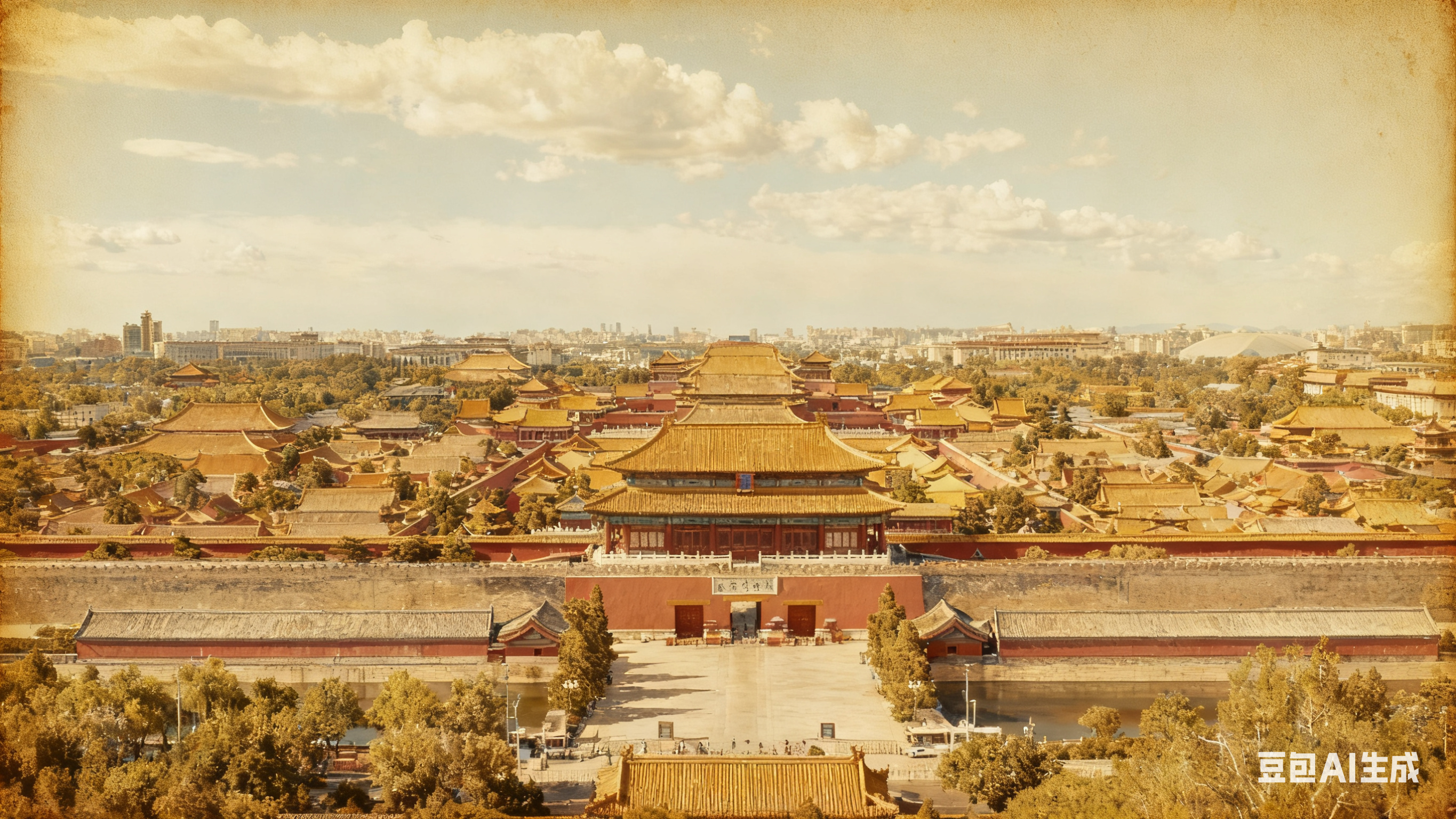
Fig: The Hall of Supreme Harmony in the early 20th century (Source: AI-generated)
The Palace Museum follows the layout principle of "Outer Court for State Affairs, Inner Court for Daily Life," divided into two parts: the Outer Court (where emperors handled state affairs and held ceremonies) and the Inner Court (where emperors and their families lived). The Outer Court centers on the Hall of Supreme Harmony, Hall of Central Harmony, and Hall of Preserving Harmony; the Inner Court is dominated by the Palace of Heavenly Purity, Hall of Union, and Palace of Earthly Tranquility.
In terms of architectural colors, the Palace Museum features yellow glazed tile roofs and red walls, symbolizing the supreme authority of the imperial family (yellow was an exclusive color for emperors, while red represents solemnity and festivity). Roof styles adhere to the "hierarchical system": the Hall of Supreme Harmony uses the highest-ranking "double-eaved hip roof," while secondary buildings use "gable and hip roofs" or "purlin roofs."
The layout of the Palace Museum strictly follows the principles of "Feng Shui," with a central axis running north-south and symmetrical left-right, reflecting the ancient Chinese philosophical concept of "harmony between man and nature" and the political ideology of "imperial power above all."
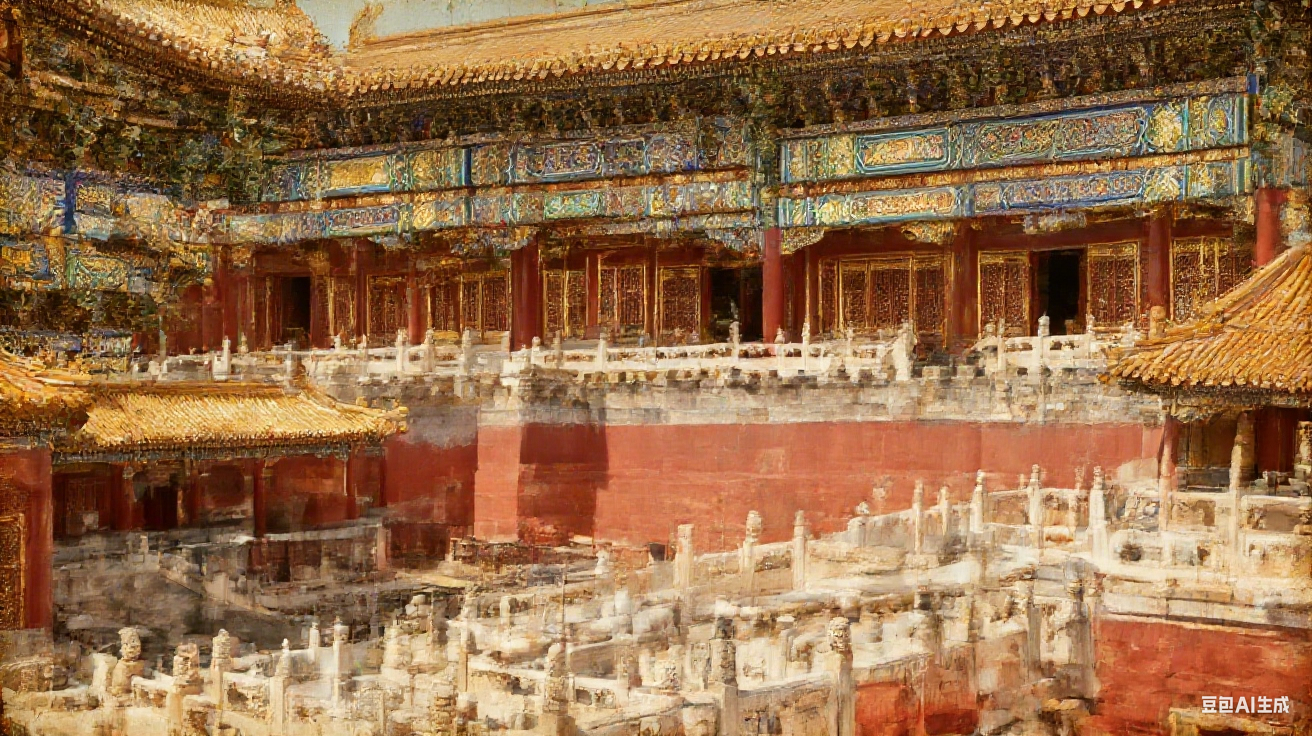
Fig: Mythical Beast Decorations on the Roof of the Hall of Supreme Harmony (Source: AI-generated, DALL·E 3)
The Palace Museum is not only an architectural heritage but also a culmination of cultural heritage. It houses over 1.86 million cultural relics/sets, covering categories such as bronze ware, ceramics, calligraphy, jade, and furniture. Masterpieces like "Along the River During the Qingming Festival," "A Thousand Li of Rivers and Mountains," and the "Xuya Square Zun" are world-class cultural relics.
As one of the largest and best-preserved ancient wooden structures in the world, the Palace Museum's architectural techniques provide a living sample for studying Chinese ancient architectural history. Meanwhile, the imperial rituals, sacrificial culture, and royal living customs it carries are important components of traditional Chinese culture.
Today, the Palace Museum revitalizes traditional culture through digital preservation and cultural and creative product development, serving as a cultural bridge connecting China and the world.
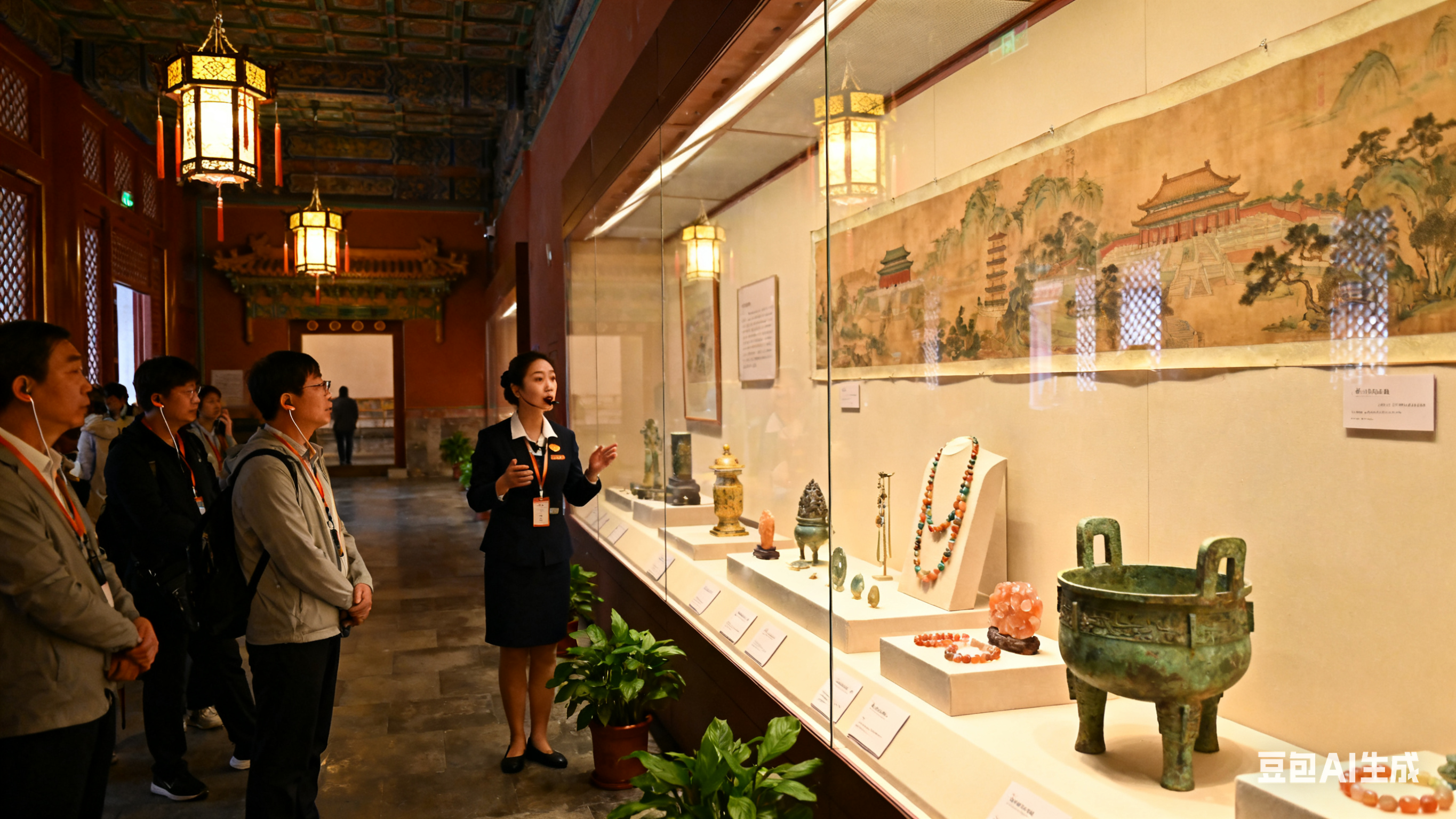
Fig: Replica of "Along the River During the Qingming Festival" (Partial) in the Palace Museum Collection (Source: AI-generated)
Total Area
Number of Buildings
Cultural Relics Collection
World Heritage Status
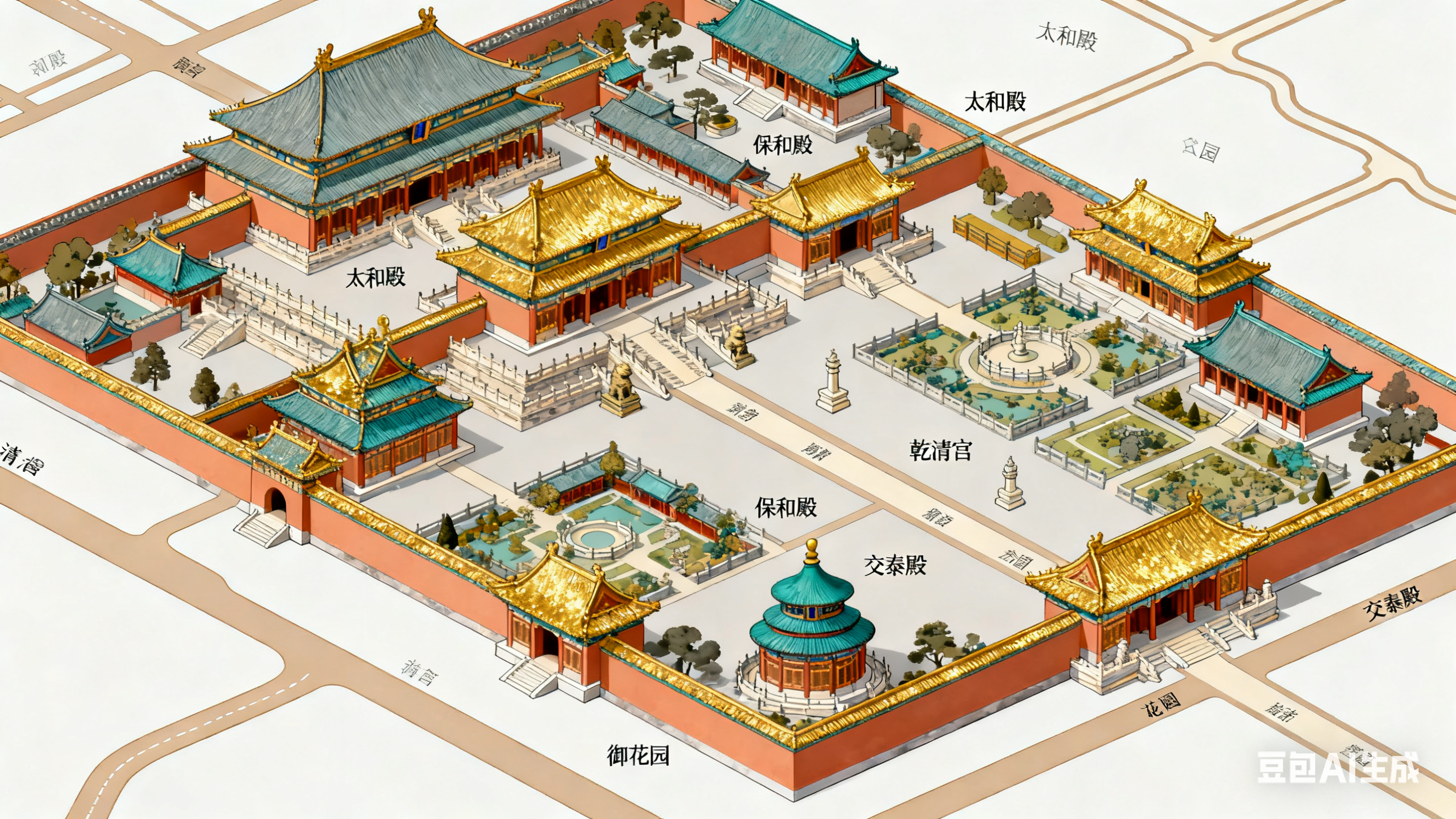
Fig: Schematic Layout of the Palace Museum (Source: AI-generated, DALL·E 3)